Monday, February 12, 2018

Prevent Fruit Scarring on Nectarine

Fruit scarring on nectarines is common in the desert Southwest. It is caused by an very small insect


that you will not see with your naked eye. This insect rips away at the skin of tiny nectarine fruits and cause even more damage as the fruit is getting larger.

The fruit is ugly and inedible because of its appearance. Not because eating it will hurt you.....it won't!

This is the same insect that causes deformed rose flower buds and flowers. Western flower thrips.

To prevent scarring of fruit you need to apply a natural product that discourages these tiny pests from ripping away at skin of the fruit. Applications should be done early and repeated through the growing season.

Monterrey Garden Insect Spray contains concentrated spinosad in a ready to apply hose end applicator. Focus on spraying the fruit, not the entire tree.


Viragrow Delivers!

Monday, February 5, 2018

Protocol for Controlling |Insects on Roses

Q. We bought this house about two years ago. There was this rose already planted.  I noticed last summer the leaves get a shiny look on them and a sticky feel. We had roses at other house never saw this before. Do you have any idea what it is and what to do?


Horticultural oil for the winter months
A. This usually means it is one of the sap-sucking insects feeding on leaves, soft stems, and flower buds. Sometimes flower petals. These insects suck on plant juices by piercing the plant and causing physical damage and/or transmitting diseases. 

They use the plant juices for their sugar content but can't use it all so they poop it out the backend as a sticky, shiny excrement. This sugary excrement attracts ants. The answer learned that if they protect these plant juice-sucking insects from other insects that might hurt them they can group them together and treat them like we would treat dairy cattle. 

They have also learned that they can move the immature of these insects to new locations and spread them out and get an even greater benefit from them. We would call it expansion to improve their "economy of scale".

The list of insects include aphids, whiteflies, mealybugs, and the scale insects. Perhaps even thrips. The number one insect on roses during cool weather is aphids. In hot weather it is usually whiteflies because aphids do not like hot weather like whiteflies do and aphid numbers dwindle while whitefly numbers are on the rise. 

Besides giving off the sticky shiny excrement, aphids cause immature leaves to begin to curl as they grow giving them even more protection since the curled leaf also protects the "herd". Adult whiteflies are pretty good flyers and when the plant leaves are disturbed they usually take flight looking like a bunch of flying white dandruff. Least common are mealybugs and scale insects.

Here is the protocol I would use for growing roses here and controlling their insect pests.
•           During the winter months and early spring months spray roses with horticultural oil twice, about a month apart, covering the entire plant.
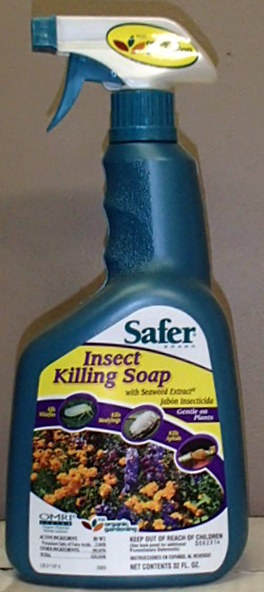
•           During February, March and possibly April spray the bottom sides of expanding leaves with insecticidal soap and control ants. I would spray 2 to 4 weeks apart depending on whether I saw a problem developing.
•           As a flower buds are developing, spray with Spinosad for thrips control if thrips are causing damage to flower buds.
Pyrethrum-based insecticide
•           As warm weather is developing, inspect the plant for whiteflies and damage from whiteflies. Control ants. Spray with pyrethrum based insecticides or use insecticidal soap until they are
controlled.


An alternative is to use a conventional insecticide that contains imidacloprid and apply it to the soil as a liquid drench at the beginning of the season. I am not a big fan of this insecticide for flowering plants. It has been implicated in colony collapse disorder for honeybees.


Viragrow Delivers!

Thursday, February 1, 2018

$10 Insurance For Your New Fruit Trees

No, we are not selling crop insurance but we do sell a different kind of insurance.
Raw Mojave Desert soil in North Las Vegas that had never been irrigated or had a crop growing on it. If prepared properly, it is perfect for growing fruit trees.
 For many years I demonstrated at the University Orchard in North Las Vegas (North Decatur and Horse Road) the importance of wood mulch to the growth and health of fruit trees growing in our native desert soils. These were desert soils had never seen any kind of irrigation or crops growing on them.

The difference in one season of growth between fruit trees, at the University Orchard growing in native desert soils, that were mulched and fruit trees that were not.
All of the fruit trees were planted the same, using 50% Viragrow compost mixed in the native soil at the time of planting. All trees received exactly the same irrigation and fertilizers. The only difference was the surface mulch; wood chips shredded from local trees.You will see the same kind of growth from surface mulching ornamental trees and shrubs.

Viragrow's OGC, "organic" wood mulch from forest products harvested in Utah. A perfect wood mulch for fruit trees and ornamentals.
Viragrow just got in a load of "organic", natural forest wood mulch from Utah. This is really nice stuff. I would highly recommend it for your fruit trees and ornamental plants. It is about as ideal as a surface mulch as you can get. It will decompose slowly adding nutrients to the soil, improving soil health and drainage, bring life to desert soils, improve moisture holding, keep weeds in check, keep soils cooler and improve root growth.
Viragrow's OGC or Organic Ground Cover, a superior natural wood mulch for improving the growth of fruit trees and ornamentals.
Pricing. $58 per cubic yard with a 5 cubic yard minimum for delivery.

Pick it up directly from our yard in North Las Vegas for $2,25 for a cubic foot. BYOB (bring your own bags) or you can purchase our 1 cubic foot bags for an additional 50 cents each.

For newly planted fruit trees we recommend 4 cubic feet per tree, spread to a depth of 4 inches and kept a distance of 12 inches from the trunk the first couple of growing seasons.


Viragrow Delivers!

Monday, October 23, 2017

Fertilizing Vegetables in Raised Beds


Q. Hello!  I met you this spring when you helped me get some of the Tomato Lady compost plus a similar version with composted biosolids.  I used some of the compost for fruit trees, but saved some for veggies boxes, which I am putting together now.  To get started, should I use 100% compost, or add anything else?  I'm thinking of vermiculite to help hold water, but also want to know what you think about rock dust, Sea-90 or other mineral additive. I can't remember if the Tomato Lady soil had some minerals added.  Also, I see that you recommend side dressing (what is this?) with a 21-0-0, which is perhaps the ammonium sulfate I see on the website?  Is that something I add later, not at the beginning?

A. Tomato Lady soil mix has everything that you need to grow vegetables for the first three or four months. You will need to add a one inch layer of compost to the bed once a year from now on out then mix it into the bed as deep as you can by tilling or spading and turning the soil over. This keeps the soil open for the roots and drainage and the nutrients loaded in the soil for the vegetables.
Tomato lady soil mix now in plastic bags

In my experience with rock dust you don’t get much out of it unless you have been growing in that soil for a couple of years and adding mineral fertilizers. If you mix in compost you probably will not see much difference when you use it.
High nitrogen natural fertilizer, blood meal at 12% nitrogen
Side dressing is applying a dribble of your favorite nitrogen fertilizer four inches parallel to a vegetable row. Nitrogen is the most limiting nutrient for vegetables and it will run out of the best soil mixes in about three of four months after mixing compost into it and growing plants. So, three to four months after planting in a newly composted or new vegetable bed, dribble lightly a high nitrogen fertilizer in a straight line parallel to the row e.g. like ammonium sulfate (21-0-0) or fish emulsion or blood meal or your favorite nitrogen fertilizer and water it in. IF the vegetables are growing like gang busters then don’t add nitrogen until their growth slows. Particularly to tomatoes.

Good idea on separating the vegetables in different beds. Make sure you rotate these vegetables into different beds each year to minimize disease problems accumulating in the soil.

Gardenias Need Special Location and Special Treatment in the Desert

Q. Can you determine what is going on with the gardenias? Why the red spots on the leaves?


A. I looked at the pictures. If you look at the leaves that are not turning brown or red yet you can see the beginnings of interveinal chlorosis or yellowing between the veins. This is because of high soil pH and alkalinity which is making iron not available to the Gardenia.

This might also be a sun issue. They cannot be planted in full sun here or afternoon sun. Keep them on the East or north side with lots of indirect (reflected) light.

Gardenias also do not belong in the desert. I'm not saying you can't grow them here but just like magnolia you've got to do things that are similar. Gardenia is even more sensitive to alkalinity in the soil and high pH than the magnolia.

You will need to lower the soil pH and at the same time add iron in a form available to it. Get iron EDDHA chelate. Get a good quality fertilizer that has an acidic reaction with the soil and stay away from fertilizers that promote alkalinity in the 
soil. Making sure the plant has adequate nutrition will make them healthier and better able to handle heat and direct sunlight.

A good product to use with the iron chelate I am suggesting is another product that Viragrow is carrying called Maxi Plex or you could use Soil Acidifier by Grow More.

I have checked prices against prices on the Internet and on most products they either beat those prices or very similar. Feel comfortable about sending people and the prices they charge.

Just like magnolia, gardenias need soil amendments at the time of planting and organic mulches on the surface to help lower that soil pH. You can use sulfur but the compost will be more effective in lowering soil pH than the sulfur and a lot easier to work with.

Gardenias should never be on the South or West side. They need the cooler microclimates of the East and North. They perform better in containers than planted in the ground because they are easier to manipulate.

Viragrow Delivers!

Sunday, October 15, 2017

Preventing Pests From Coming Inside the Home

As temperatures cool down in the fall, outdoor insects will enter your home for warmth. As insects enter your home, their predators, like spiders and scorpions, will enter as well. Your first line of defense is to seal their entry points. Seal openings, cracks and crevices with caulk and weather stripping.


Another line of defense are barrier, or perimeter, sprays. Barrier sprays applied to the home’s exterior are an effective method for keeping pests, ants, spiders, scorpions and cockroaches, at bay.

Timing is critical. Sprays should be applied when nighttime temperatures are cool enough to wear a light jacket.

What will I need to apply a barrier spray?
To apply a barrier spray you will need a pressurized sprayer, an effective pesticide and protective gear
Sprayer. Plastic sprayers are effective, inexpensive and easy to clean after spraying. For most home applications, 1 to 2 gallon compressed air sprayers are large enough. Chapin, Hudson and Solo make good sprayers for homeowners and have extra parts available if they are needed.

As temperatures cool down in the fall, outdoor insects will enter your home for warmth. As insects enter your home, their predators, like spiders and scorpions, will enter as well. Your first line of defense is to seal their entry points. Seal openings, cracks and crevices with caulk and weather stripping.


Another line of defense are barrier, or perimeter, sprays. Barrier sprays applied to the home’s exterior are an effective method for keeping pests, ants, spiders, scorpions and cockroaches, at bay. Timing is critical. Sprays should be applied when nighttime temperatures are cool enough to wear a light jacket. 

What will I need to apply a barrier spray?
To apply a barrier spray you will need a pressurized sprayer, an effective pesticide and protective gear
Sprayer. Plastic sprayers are effective, inexpensive and easy to clean after spraying. For most home applications, 1 to 2 gallon compressed air sprayers are large enough. Chapin, Hudson and Solo make good sprayers for homeowners and have extra parts available if they are needed.


The sprayer’s hose has a lever outfitted to a “wand”. At the very end of the wand is a spray nozzle containing an interchangeable spray tip. Make sure the spray tip is a “fan” type. Fan-type nozzles have a straight slot that runs across its width. Fan-type nozzles allow pesticide applications in a wide “swath” around the perimeter of the home.

Pesticides vary in effectiveness, how long they last and safety. Viragrow chose Prelude because of its effectiveness as a pesticide and degree of safety. The EPA classifies Prelude as “moderately toxic”
(class II) to “practically non-toxic” (class III). However, protective gear is required when handling any pesticide. 

Protective gear is required when handling any pesticide. Before applying, please read the label and understand any safety precautions. 
        Unlined, plastic gloves should be worn when mixing or applying any pesticide with a sprayer. 
        Never apply pesticides during windy conditions. 
        Protect your eyes, mouth and nose when applying pesticides.
        Always wear long sleeves and long pants, socks and shoes.  Wash clothes and shower immediately after applying.
             
 How do I apply a barrier spray?
Barrier sprays can be applied as quickly as walking around the perimeter of your home twice. This is basically what you will do when you make the application, pausing briefly to pump up your compressed air sprayer.


Mixing the pesticide
1.     Pour two thirds of the water required inside the compressed sprayer. 
2.     Using a measuring device, add the amount of Prelude specified on the label to the water inside the sprayer. 
3.     Using the remaining water, rinse the measuring device at least three times. Include rinsates in the spray mix. 
4.     Finish filling the sprayer until you reach the correct amount of spray mix.

Making the application. Perimeter treatments form a continuous barrier on exterior surfaces of the home and the ground approaching the home. Areas where dissimilar building materials meet are points of entry. Make sure that the spray residue is continuous and slightly overlaps. 
        Hold the wand or adjust the nozzle so the spray is a vertical swath. 
        Apply in a continuous 2-3 foot swath on the structure around the foundation of the home. 
        Make a second application in a continuous 2-3 foot swath on the ground leading up to the foundation. 
        Stop periodically and re-pressurize the sprayer when the spray droplets are no longer coming out forcefully enough to evenly cover the surfaces. 

Cleaning the sprayer. Rinse the sprayer three times with clean water. Add about one pint of water to the sprayer, close and pressurize it and spray this residue on the ground over a large area such as your driveway. You would do this three times. This cleans the inside of the sprayer, the hose, nozzle and spray tip. Spraying the residue over a large area encourages rapid breakdown of the chemical and does not concentrate it in one spot, making it a point of potential pollution. Never dump it down a drain or toilet.

How often should I reapply Prelude?
Always read the label when determining how often to reapply a pesticide. How long a pesticide will
last, or its residual, varies with the pesticide and the environment. In full sunlight, when temperatures are high and water comes in contact with the pesticide, it will not last as long. Generally speaking, you should not need to reapply Prelude more often than once a month.

What should I do if there is pesticide left in the sprayer when I am done?
It is best to find other areas that need treatment to finish what’s left in the sprayer. Never dump the remaining pesticide in toilets, drains, storm sewers or gutters. Apply to sheds, woodpiles, garages, carports and areas where utilities enter the structure and around doors and windows. 
As temperatures cool down in the fall, outdoor insects will enter your home for warmth. As insects enter your home, their predators, like spiders and scorpions, will enter as well. Your first line of defense is to seal their entry points. Seal openings, cracks and crevices with caulk and weather stripping.