Monday, January 13, 2020

Smell the Difference: Viragrow's "Organic" Compost Made from the Forest

Smell the difference!


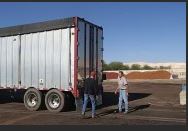
Viragrow is bringing in manure and biosolid-free compost, made entirely from forest products which have never been sprayed with any pesticides, from northern Utah. This compost has been treated with microorganisms at the composting facility that help speed up the decomposition process of this natural, woodchip-based product.
Viragrow's Organic Compost
Once it arrives in Las Vegas Viragrow fortifies this compost with enough nitrogen to bring the carbon to nitrogen ratio (C:N) into an acceptable range for all landscape plants as well as vegetables. This is about as close as we can get to a truly "organic"compost. No worries about biosolids, animal manure products, commercial kitchen waste, heavy metals, pharmaceuticals and personal care products. If we could follow the life history of all those forest trees used to make this compost, we could apply to USDA for organic certification! But that paper trail is impossible so this is as close as we could get. That's what we named it, Viragrow's Organic Compost. We hope our customers will appreciate our efforts to bring you what you wanted. We could smell the difference and it put a smile on our faces!

Viragrow Delivers!

Featured Article: Good Irrigation Managers Save Water

This will appear in Southwest Trees and Turf in November, 2014.


Avoid Mayhem with Good Irrigation Managers
Bob Morris, Consultant for Viragrow, Inc.

Determining the best irrigation schedule for a mixture of landscape plants is difficult enough but when salinity is involved, either in the soil or in the irrigation water, it complicates matters. Let’s cover some irrigation do’s and don’ts and see how salinity might affect the way we irrigate.
Except for shallow rooted plants like lawns, annual flowers and vegetables in raised beds, daily irrigations should be avoided any time of the year. Many turfgrasses and annuals have root systems that extend into the soil 12 inches or less. During the heat of the summer and under desert conditions some of these plants may require daily irrigations.
The concept of irrigating nondesert landscape plants is focused on wetting the root system to its entire depth, allowing the soil to drain and re-wetting the soil again when half of this water has been used by the plant or evaporated.
So we can see that the volume of water applied in a single application is directly related to the depth of the root systems of plants. When designing a landscape irrigation system we try, to the best of our abilities, to put plants with similar rooting depths on the same valve or station.
More often than not we are handed an irrigation system with a mixture of plants that have a variety of rooting depths. When deciding an irrigation schedule for a single valve or station we generally have two options; set the number of minutes based on the average rooting depth of all the plants or let the plants with deepest root systems dictate the number of minutes of station runtime.
Hunter irrigation controller or time clock
This decision depends on whether to conserve water or minimize landscape problems. When we decide to under irrigate some plants so the majority receive the correct amount of water, we may see some plant damage. If the under irrigation is not severe, we may see the slowing of plant growth, a decline in density due to leaf drop, leaf tip or burning of leaf margins. When plants are severely under irrigated then we begin to see branch die back and in some cases death.
Under irrigating, or applying less water than dictated by a plants rooting depth, can also impact safety issues. What happens if we under-irrigate large trees such as pines which have shallow

roots to take up water but require deeper roots to anchor it in the soil?
Wind blowover to trees due to shallow roots.
Current irrigation technology is based upon time management and varying how water is applied to plants. This technology varies the amount of water applied to plants by changing the number of minutes valves are open, increasing or decreasing the points of water emission or changing the rate of water applied at the point of emission. This translates to increasing or decreasing the number of drip emitters, bubblers, nozzles or spray heads or substituting old points of emission for new ones that have different rates of application.
Making these changes to an irrigation system that was designed by a professional and focused on the uniform application of water, more than likely will make the system less uniform and less efficient. This will most likely result in substantially higher water usage. These types of alterations to professionally designed systems must be done with care.
Salt deposits on pine needles from overhead irrigation using reuse water
There are some obvious cases where changes must be made. For example, changes must be made when some plants are receiving excessive amounts of water or not enough water while others on the same valve appear to be watered adequately.
As plants get bigger, they need more water. When plants get bigger, their tops get bigger as well as their root system. Increasing plant size requires the application of higher volumes of water. Increased plant size dictates that the area irrigated under the plant also needs to be increased. Logic tells us we need to increase the amount of water by applying it to a larger area.
Just because a few plants on an irrigation valve have grown larger seldom requires increasing the number of minutes of runtime. Other plants on the same circuit that received adequate amounts of water would then be over-irrigated for the sake of a few.
Of course increasing the number of minutes is the easiest solution to the problem but is it the right one? The quick fix of bumping up the number of minutes creates no new revenue for the landscape maintenance company and is likely a poor solution to an irrigation problem. Is it possible that a discussion of the problem with the owner or supervisor might result in a better solution to the problem for everyone involved? Might this discussion generate revenue, or even a better looking landscape, and also result in water conservation?
The second decision in scheduling irrigations is determining when to apply water. This is a very different question than determining how much water to apply. Unlike the first question, the answer to the second question is implemented solely by determining when to turn the valve on or off.
Research has demonstrated that no irrigation controller, no matter how “smart” it is, can
Watchdog weather station used for monitoring current and historical weather
substitute for a knowledgeable irrigation manager. The principal reason is that knowledgeable irrigation managers focus on their irrigation schedules ahead of the irrigation curve, not behind it. Most “smart” irrigation controllers are irrigating behind the irrigation curve or relying on historical information to predict the future.
Knowing when to turn an irrigation valve on is half art and half science. The “science” part of it can be handled by many good irrigation controllers. The “art” part of it is staying aware of your irrigation system, how it’s operating, monitoring the landscape and paying close attention to current as well as projected future weather conditions, particularly during the summer months.
You can’t do a good job irrigating sitting behind a desk. Knowledgeable irrigation managers seldom if ever take vacations during the heat of the summer. That is their busiest time. This is the time they are most aware of their landscape environment, weather environment and irrigation “system” environment.
Three primary weather factors good irrigation managers are constantly monitoring, whether they realize it or not, current or potential changes in the temperature, wind and sunlight intensity.
In most environments, and in particular desert environments, our everyday irrigation predictions are based on normal, seasonal temperatures, normal wind speed and a clear sky. The single factor most likely create mayhem in a landscape during the summer months is wind. The second is above normal spikes in temperature. The absolute worst scenario is a spike in daytime temperature accompanied with strong winds and a clear sky. A good irrigation manager stays ahead of the curve by applying water in anticipation of mayhem, not during mayhem.
As if this was not difficult enough, salts and salinity add a dimension to the irrigation dilemma which test the abilities of the best irrigation managers. Salts are salts. Without getting too technical, any time a substance is added to water and dissolves you have the potential for increasing salinity. Any time you add something to the irrigation water or the soil you may affect salinity.
Two types of plant damage result from excess salts or salinity in the soil or irrigation water; the type of salt may be directly toxic to the plant (such is the case with plain old table salt which contains two very toxic chemicals to plants; sodium and chlorine or chlorides) and competition with the plant for water.
Any type of salt, table salt or even fertilizers, will dissolve in water adding to a general increase in salinity. Slow release fertilizers are less of a problem in this regard than fast or quick release fertilizers. When salts of any kind are added to the soil, these salts compete with the plant for soil moisture.
In other words the salinity of the soil “pulls” or holds on to water, making water less available to the plant. This means that when salinity is a problem, we need to irrigate more frequently to reduce plant stress. This is particularly true in summer months.

Two basic concepts when irrigating to avoid salinity problems are dilution and flushing. Keep the salts diluted and add enough water to flush these salts below the rootzone. This requires that the soil drains adequately. 

Viragrow Delivers!

Rosemary Oil Effective against Spider Mites

This is an interesting piece of research done in British Columbia using Rosemary oil against spider mites.The two spotted spider mite is a very common pest of ornamentals like Italian Cypress and tomatoes.


No Access
Researchers in British Columbia found that pure Rosemary oil and a rosemary oil-based pesticide was totally effective (100% mortality) against the two spotted spider mite, a common pest of many ornamentals, fruit trees and vegetables. Not only did it kill two spotted spider mites, Rosemary oil repels spider mites and makes it less likely for them to deposit their eggs on plants sprayed with this oil. It was demonstrated that a predatory mite, one that attacks two spotted spider mites, is more tolerant of rosemary oil. 
Spider mite, webbing and leaf miner damage on tomato
The big advantages to the use of rosemary oil is that fruit that was just sprayed can be harvested immediately with no waiting time. This is not true of conventional pesticides where there is a waiting time between the application of the pesticide and before you can pick the fruit. Laboratory bioassay results indicated that pure rosemary oil caused complete mortality of spider mites at concentrations that are not phytotoxic to the host plant. Moreover, rosemary oil and rosemary oil-based pesticides are nonpersistent in the environment

Journal of Economic Entomology 99(6):2015-2023. 2006 
doi: http://dx.doi.org/10.1603/0022-0493-99.6.2015

Viragrow Delivers!

Mulch Lying Against the Trunk Can Lead to Collar Rot

Q. I've had a problem with a cape honeysuckle. I have two plants that are trellised and were thriving (~5 feet tall) until one of them began to wilt last Tuesday. By Saturday the leaves had all dried up and fallen off. I'm pretty sure it's a goner. There was no sign of insect or wind damage, and it had plenty of water. And the other plant is still doing fine. They had the same water schedule, same sun, same soil.

Crown rot or collar rot of honeysuckle after mulch has been removed from the stem. Notice the dark color like a watermark on the stem.
The only thing different with the dead plant was that I covered that side of the yard with a large 2-3" decorative redwood mulch two weeks ago. Could something leeching out of the mulch kill my honeysuckle? There's a red discoloration around the base of the stem (see attached picture), that makes me suspect this.

I'd like to get to the bottom of what happened before I invest in a replacement, especially given how quickly the plant died.

A. This sudden death sounds more like a problem of having wet mulch in contact with the stems. Wood mulches are great and have a lot of potential benefit to plants particularly honeysuckle. 

But, if the mulch is placed around the plant, and the plant is fairly young, and the mulch stays wet, it can cause the trunk of many plants to become infected with one of the soil borne diseases. This will rot the trunk of these plants and basically strangle the plant of water. We sometimes refer to this as collar or crown rotand it happens a lot with woody plants. 

We usually see this most often when woody plants are planted too deep in their planting hole and soil is in contact with the trunk. This is the reason plants must be planted at the correct depth. I have seen this also when established woody plants have soil mounded up around the trunk. When the soil stays wet, the trunk rots. We see it also with woody mulches in fruit trees

When woody mulches are in contact with the trunk of young trees the trees may develop collar or crown rot. We need to keep mulch away from the trunks of woody plants at least six inches to prevent this from happening. Use less wood mulch in the areas close to their trunks.Viragrow Delivers!

What is Rock Dust?

In 2014 rock dust created a lot of excitement in the gardening community. 

Rock dusts Kelzyme, Zeolite and Azomite before testing.
YouTube video on rock dust
Background on Rock Dust

Raised vegetable beds were prepared and three rock dusts
were compared against the addition of compost only.,
Viragrow took a close look at three different rock dusts in a demonstration trial in North Las Vegas. The trial was overseen by University volunteer Michael Barrett at the University of Nevada Center for Horticulture and Urban Water Conservation. We did not have the funding to conduct a full-scale research trial but we relied on gardeners who volunteer at this facility to give us their feedback.

We compared three rock dusts to vegetable raised beds that had fresh compost added.  The plots were referred to only by letter; A, B, C, D. Only Viragrow knew which plot was which. Viragrow purposely stayed out of the trial so that we would have no influence over the results.

Master Gardeners and volunteers watched the plots closely and were very interested in the performance of vegetables growing in these plots. The conclusions were pretty obvious: adding any type of rock dust improved vegetable production and performance over the addition of just compost to the raised beds.

With these results in hand, Viragrow decided to include rock dust in its new compost formulation called RejuvenateSee Rejuvinate here. Scroll to the bottom of page linked above.

Viragrow is currently carrying two different rock dusts; Kelzyme and Zeolite. Azomite performed equally as well but our decision was based on performance as well as our cost from the manufacturer.Both of these products are available in small or large quantities directly from Viragrow. For more information on these products visit our website using the two links below.

Visit Viragrow's Kelzyme and Zeolite through this link.

Viragrow Hours

Viragrow is open Mondays thru Fridays from 600 am to 330 pm. Saturdays are from 700 am until 100 pm.

We are located in North Las Vegas, Nevada, not far from I-15 and Cheyenne.

We are closed on major holidays.

Call 702-399-3868 to double check.

Cost of Viragrow Compost?

Compost is made from recycled waste, correct? So why is it so expensive? The cost of the simplest compost is not very expensive if you just consider the ingredients. Cost of a commercial compost is tied up in extra ingredients, mixing, space in the yard and transportation.
Viragrow's biosolid free compost.

Cost of Ingredients

several types of compost are available for purchase locally and from distant places like Malibu, California a you. The cost of compost can range from $0 if you make it yourself to over $200 per cubic yard for some very high-end composts. The least expensive compost are made from waste products but when amendments are added like peat moss, worm castings, perlite, seaweed extracts for example then the price increases because of the costs of these expensive amendments.
You can buy starter fertilizers but it is not needed for Viragrow soil mixes for at least one growing season.

Another ingredient needed for making compost is water. Our compost is made in California where watering prices are a bit more reasonable. It's included in the cost of a cubic yard of compost.

All Viragrow soil mixes are tested before sold to the public.

Mixing Costs

Planting directly into compost is not wise. Compost is an ingredient when making soil mixes. The most compost we use when making a soil mix is one third of the total mix. The simplest soil mix we have is the Garden Soil Mix and it is one third compost and two thirds sand. When its sold from Viragrow the cost of mixing is part of the price.

Viragrow soil mixes are used in raised beds and containers for growing vegetables.

Space for Storage

Compost made in California is stored at the Viragrow yard in North Las Vegas. In the spring and early, compost turnover is quite rapid. But we also need space for our mulch which moves out of the yard quite rapidly in the Fall.This ends up as an average cost per square yard of storage space. Of course Viragrow must rent this space and that is all wrapped up into its final price.
Composts and soil mixes fill the yard at Viragrow.

Transportation

Getting compost made in California at a licensed composting facility and trucking it to Las Vegas is a major cost. The soil mixes can be mixed here but the compost cannot be made here. The ingredients for making compost are available in California; the wood from sawmills used as a bulking agent for the compost comes from Northern California, Oregon and Washington. Then this compost is made and hauled from California to our yard in Las Vegas in large bulk deliveries and finally to your site in smaller truck loads to your home.
Deliveries of compost are made from Southern California to the Viragrow yard in North Las Vegas.


Where to Get Compost?

Q. I have an 8x8 raised bed garden 3 feet deep.  About 3 years ago I bought soil from Viragrow here in North Las Vegas.  Have also added rock dust bought from Viragrow.  Last year I added 5 bags of cow manure from Star Nursery.  I would like to get the soil tested.  Is there anyone in the Las Vegas/North Las Vegas area that does this.   Also, where can I go for good compost?  Any info would be helpful.  Thanks so much 

A. We don't want to sound overconfident, but Viragrow has the best compost in Las Vegas. Unlike other compost that you can buy, Viragrow contains a lot of plant nutrients so the application of extra fertilizer is not needed. Typically all the fertilizer that needs to be applied is a small amount of high nitrogen fertilizer after about six months of producing vegetables and herbs in this soil mix. High nitrogen fertilizers can be in the form of mineral fertilizer like 21-0-0 or blood meal at around 12-0-0. 

Forget the cow manure. There are too many problems using it to cover here. I know it's cheap but "you get what you pay for". If you and a 1 inch layer of compost to this raised bed and rototill or double dig it into the existing soil you won't need anything added. You won't need a soil test unless you have growing problems. All the nutrients that plants need are contained in the compost.

You can get bags of compost from viragrow for $4.25 per bag. For your raised bed about three bags of compost are needed. For $15 you have everything you need for growing great vegetables and herbs and rebuilding the soil without mineral fertilizers.

Where Can I Get Soil Tested?

Farmers test their soils every year. They must know how much fertilizer and soil amendments they should add to a soil so they don't waste money. Homeowners can get by testing their soil every three to five years and making those necessary adjustments directed by a soil test.

One soil testing laboratory we use quite often is in Modesto California called A and L Soils Testing Laboratory. I general soil test will cost about $75. Be sure to have them analyze the macronutrients as well as the micronutrients including boron. In some desert soils boron levels can be excessively high and damage plants.

Soil tests can be difficult to interpret. Viragrow can help interpret those results for a small fee. If you are using a new soil mix from Viragrow then testing won't be required for at least three years after your purchase. However, adding a 1 inch layer of compost from Viragrow and mixing into the soil every 2 to 3 years will keep your raised beds and vegetable growing areas in tip top production.

Mix Soils Together or Get Rid of Soil Interfaces

Q. I dug an area about  5 feet by 8 feet at around 12” deep. I removed all the bigger rocks and mixed remaining soil at around 70% native dirt to 30% soil pro compost and put it back in area that I dug. Native soil has lots of clay because it is was very hard to dig. 

Fill is used in many subdivisions. Sometimes this fill contains alot of rocks of different sizes. Landscape fill is extremely variable in quality in Las Vegas.

Because most of the soil that I removed contained very large rocks, I lost a lot of volume. I need to raised level of this area by about 5” to be in line with surrounded soil. Therefore I need to raise the level by approximately 40 sq ft x 5” high which I am reading to be about 3/4 of a yard of topsoil.

I still have about 1/2 a yard of Rejuvenate soil that I purchased from Viragrow. I also have about 1/2 ton of washed concrete sand left over in another pile that I was planning on discarding. 

What is your opinion on  using the Rejuvenate garden soil to raise the level on top of the mix of native soil and compost? Or even using the washed concrete sand (paver level sand) and mix it with native soils to give it volume? I am not sure exactly what I am going to be planting. Can be a deciduous fruit trees or some bushes . I just wanted to get the ground nice ready for future planting and removing the large rocks that I mostly have in backyard.

A. You can mix the two together with no problem. I am looking for two possible problems when reading what you are planning to do. It's best to never use reject sand. True reject sand may have a lot of very small particles that can slow down or plug drainage. The second is creating an interface problem between pure sand and the soil mix. For this reason, either mix the two ingredients together or layer them. If you decide to layer them, be careful of creating an interface between the two layers which can affect drainage. To get around this interface problem, mix the two layers together where they come together and then finish filling the hole.


A. 

Monday, December 16, 2019

Cold Composting vs Hot Comosting

Cold Composts vs Hot Composts

We made up the term "cold composting" but that's what happens if the temperature in the composting pile doesn't reach 165F. Why are temperatures above 160F desired?

Hot composting produces heat. On a cold day this heat may appear as steam coming from the composting pile like a warm indoor swimming pool when the outside door is open. Yes, compost temps can reach 165F or more but it only takes a little bit of heat and water to make this "steam" come from a compost pile. Think of your warm breath on a cold winter day.

Nearly all the bad pathogens are killed if temperatures are high enough for a long enough time. Thats part of the composting process to make them safe to handle. Temperatures above 160F for 30 minutes or longer kill all the pathogens living in manures added to compost. Including human manure.

How are composts biologically active?

By turning the piles or mixing them. This mixing spreads the beneficial microbes throughout the compost. Only the center of a compost pile gets hot. The outer edges are cool. The outer edges are where the good pathogens hang out. By turning the compost pile or mixing it, the previously hot compost that is now sterile gets reinfected with good pathogens where they repopulate it very quickly if their environment is warm and moist.

A good compost will be "biologically active". A good compost will be dark brown, crumbly and rich when you touch or smell it. Sometimes you can smell nitrogen rich ammonia coming from a rich compost. The smell of ammonia means the compost is so rich that it can't hold anymore nitrogen and so it "leaks" out of the compost into the air as ammonia. 

Viragrow Compost Does Not Contain SLUDGE

Sludge is nasty. There is a world of difference between sludge and composted biosolids. Viragrow compost DOES contain composted biosolids.  Not our "Organic" compost, its Vegan, but the 166 or Viragrow compost does. But the composing process makes the municipal solid waste very clean. Let me explain.

Municipal Waste = Liquid Waste + Solid Waste

Sludge comes from any municipality. Technically what comes from a municipality is called municipal waste. It is about 99% water. This municipal waste is first removed of of any metal, plastic and glass. What remains separated into liquid waste and solid waste. Hence the term, municipal solid waste.
Image result for what is municipal waste stream


From Science Direct at https://www.sciencedirect.com/science/article/pii/S1110062118301375

Liquid Waste

The liquid waste is either evaporated or leached in large open areas or cleaned up and returned to the original water source. In the case of Las Vegas, it is either returned to the Colorado River or (if its clean enough) it can be pumped into water wells where it mixes with underground well water in the aquifer. Yes, mixed with our potential drinking water. That's how clean it is.

Solid Waste

The solid waste can then be buried in landfills or turned into something useful like fertilizer or compost. Think of Milorganite. Turning it into something useful is a form of recycling. Burying it in a landfill gets rid of it and it is not recycled. Out of sight, out of mind.


Municipal Composting Facilities

If politicians pass laws that these landfills cannot contain recyclable solid waste (or the public is enlightened) then some or possibly all of the landfills will be closed to municipal solid waste. What to do with this waste? Recycle it.

Inland Empire composting facility in Southern California that turns waste into valuable compost like 166 Compost and Viragrow Compost.
In this composting facility the compost produces enough heat to sterilize the compost and remove all pathogenic fungi and bacteria. 

Monday, December 2, 2019

Advantages When Adding Potassium to the Compost

What needs to be added to a Viragrow soil mix right at the start?

None to improve plant nutrition....at the beginning. Maybe six months to a year later.
Look at all those nutrients washed away from this compost pile! You can use this plant nutrient packed water as a fertilizer and plant protector called compost tea.

The compost is rich in nutrients. Compost also lowers the alkalinity or soil pH into a better range for plants. As long as you add decomposing or decomposted amendments to the soil about once a year the soil pH will be good for plants. The alkalinity of the soil will begin to creep up after the compost begins to disappear in the second and third year. I'm talking about Viragrow compost.

One major element that could be bumped up a little in our compost is potassium. For you organic gardeners Greensand is usually recommended. Everyone knows bananas and banana peels are rich in potassium but did you know that wood ashes, avocado skins, fish emulsion, lots of fruit skins added to your compost or mixed up in your blender and poured on your compost or the soil near your plants will also work. Just chop this stuff up in very small pieces so they rot easier and release the potassium faster. They rot faster in warmer temperatures.

But did you know that some seaweed extracts are naturally high in potassium? Check the label. If the seaweed extraction is done using potassium hydroxide as part of its extraction the extract may be very high in potassium. But the label will tell you.


How to Eliminate Pests While They Sleep

December and January are the best times to go on the offensive and reduce pest problems for 2015. Most people wait until there is a problem. Get ahead of the curve and start now with a safe, organic spray that is easy to use and totally safe for you, your pets and the environment.


This will be the most important spray you can apply for the coming season and we will tell you what to use and how to do it. Horticultural oil sprays are the most overlooked sprays by homeowners but not by commercial producers. They know its value and schedule it to be done right after pruning.

Viragrow has insecticidal oils in small quantities and 2 1/2 gallon quantities
$95 
Makes 150 to 250 gallons of finished spray


Ultrafine oil is a highly refined insecticidal oil used primarily for controlling overwintering insects and mites. Oil applications “blanket” insect pests and smother them as well as disrupt important membranes. Ultrafine oils are useful on a wide range of insect pests, particularly scale insects, whiteflies and spider mites. Ultrafine Oil is a primary component of any organic spray program for insect control during the fall, winter and spring months.


Apply Ultrafine Oil 2 to 3 times during late fall, winter and early spring when daytime temperatures are above 50° but less than 90°F. Spray pressure should be high enough to deliver tiny droplets to plants. Be sure to spray all limbs, branch collars, bud unions and any cracks and crevices where insects may overwinter. 


Horticultural oils are highly refined oils that are fluid enough to be applied with any type of sprayer; canister, backpack or hose end applicator. Usual rates for mixing are around 2 to 3 oz of oil for each gallon of mixed spray.


Mix the horticultural oil with water in the amounts specified on the label. Spray deciduous (no leaves) trees and shrubs with this water and oil mixture covering the trunks and major limbs. Concentrate your efforts close to the ground where they like to be protected from mulches and leaf debris.

Viragrow Delivers!

Apply Viragrow's Horticultural Oil 2-3 Times This Winter

Applying horticultural oil to your fruit trees and woody landscape plants is very important this winter if you want to reduce pests for next year. Make one application in December and then another in January. You can use a hose end applicator or pump sprayer for taller trees. Pick an unusually warm day without any wind to make an application.


Don't forget to give the bottom of the trunk where it enters the ground an extra squirt because those places and any weeds are where pests like to hide in the winter. Control the weeds, too!

This is a "summer" oil so it can be applied when leaves are out and up to temperatures about 85F.

Pests do not migrate. They survive on your landscape plants and fruit trees until next year when they lay more eggs and start the process all over again. This is your chance to suffocate them!

Insects controlled include:
Aphids, mites, whiteflies, leafhoppers, peach twig borer (wormy peaches), coddling moth (wormy apples), scale insects and many others!

Application:

  • Pick a warm day with no wind.
  • Use 3 to 4 oz of oil mixed together with 96 to 97 oz of water and mix thoroughly. Spray the trunks and large limbs of fruit trees and ornamental trees and shrubs from the base to as high as possible.
  • To be effective the oil spray must come in contact with the overwintering pest.


Ultra Pure Dormant Oil, 2 1/2 gal.
$95
Makes 150 to 250 gallons of finished spray after mixing
 Contact us for smaller amounts than 2 1/2 gallon quantities.

Some outside reading about oils:
Washington State University
Colorado State University

Viragrow Delivers!

Do You Want to Plant in Winter?

You can plant any cold hardy tree, shrub or fruit tree during the winter (except palms) but don't forget the mulch! Surface mulches provide a blanket of temperature control and preserve soil moisture so that planting during this time will be successful. It is inexpensive insurance.

Surface mulch as a blanket on the soil surface, decomposing and improving the soil

Soil temperatures need to be at least 45° F for roots to grow and establish plants. Seldom do our soils get below this temperature after the first few inches below the surface.

Make sure you add an equal amount of Viragrow compost, Viragrow planting soil mix or bagged EZ Green compost to your backfill surrounding the roots of these trees and shrubs. Unlike some others, all of our soil mixes are full of nutrients so you don't need to add any extra fertilizer to the soil at the time of planting.

Viragrow compost


EZ Green composted chicken manure

Make sure the planting hole is deep enough to accommodate the roots of the plant. You do not need to dig deeper than this unless the soil is so hard it can not drain water freely. Dig the hole at least three times the diameter of the root system and mix our soil amendments with all of the soil before you put it back in the hole. It is always wise to have the hose running into the planting hole when you are putting back the soil around the plant roots. This helps to eliminate air pockets and helps the plant stand upright.


Nearly all plants will perform much better with 3 to 4 inches of organic surface mulch applied after planting. Use our Redwood mulch or Gorilla Hair for that exquisite finished look.


Viragrow Delivers!

Soil Mix to Use When Planting Mesquite

Q. I’m digging out an area to plant a Chilean Mesquite and the dirt is really terrible.  I’m going to dig about 6’ diameter, nice and wide, and to the depth of the rootball, like you said. I want to replace all the dirt in the hole with quality soil. Is there a mix from Viragrow that you can recommend for a Mesquite?

A. Let me add more information. I think you are ready for it.

1. Make sure the hole you dug will drain water. If you fill the hole with water it should drain in 24 hours. If you are only putting water in the bottom of the hole because you want to hurry, then put about two inches of water in the bottom of the hole TWICE.  

The first time watering, water will move to the dry surrounding soil fast so it will move quickly to fill these dry spaces. Let it. Then refill it and mark the level with a stick or nail. Something easy to see and find. That water level should move down, probably slowly but it should move. The water level should drop one or two inches in a few hours or faster. If it does, then drainage is not a problem.

You should not have to dig a hole deeper than the roots of the plants you are digging. UNLESS water does not drain from the hole. If you MUST dig the hole deeper, make sure to compact the soil below the tree before planting. You can compact the soil with water draining or mechanically at about 90% compaction or firm enough so that your footprints are not more than 1/2 inch deep when you walk across it.
            
2. It is best to use the same soil taken from the hole rather than buy new soil. But this soil should have rocks removed larger than a golf ball. Then mix compost with this soil. Use an equal volume of compost (its going to be "fluffly") with an equal volume of soil (it will be more compact). This will result in an organic content of your new soil of about 25 to 30% which will drop to about 15% in year 2 and about 7% in year 3 or 4. 

Trees and shrubs do best with organics in the soil of about 5%. The roots will establish in this soil quickly if the plant is staked to keep the roots from moving.


If you want to use a soil from Viragrow in the planting hole instead, then use their Garden Soil Mix straight and fill the hole with it. As you are filling the hole with this mix, collapse the edges of the hole into this mix so the surrounding soil is well mixed with the imported soil from Viragrow. This will avoid a boundary layer of two different soils (your soil vs garden soil) but this boundary should, instead, slowly mix with each other as you go from inside the hole to outside the hole. This mixing helps remove a strong boundary layer.
           
3. Viragrow recycled municipal waste carries a very high nutrient content in a slow release form in their 166 and Premium composts. The tree will not need additional fertilizer for maybe three years. With a mesquite tree you will control its growth with your frequency of applying water. Not the volume of applied water. 

When first establishing the tree, water it like any other tree. Water frequently so water gets 24 inches deep and then hold off with the next watering AT LEAST one day until you see new growth and then start watering less often. You want it to grow faster, give it water more often. You want it to grow slower, water less often. But always give it the same amount of water each time.

December Classes at Viragrow for Landscapers


December classes for Landscapers by Bob Morris at Viragrow:

  • How to Prune Landscape Trees
  • How and When to Fertilize Landscape Trees
  • How to Prune Fruit Trees
  • Control 2020 Landscape Pests With Winter Sprays!
All students receive certificates from Viragrow after successful completion of the class. Use them to build your customer base and secure work.
Be a Viragrow commercial customer and attend free!
Let us know you are coming at Info@Viragrow.com or ask us questions.

Monday, September 16, 2019

Iron Chelate EDDHA is In!

We were out of it for about a month but it is now back on our shelves. Viragrow is the ONLY place carrying it in Las Vegas. Prevents yellowing in fruit trees, ornamental trees, shrubs and groundcovers. We have it in 5 pound bags and 1 pound cannisters. Less expensive than on Amazon or any place we know about. One tablespoon per tree and lasts about 12 months long.

 5 lb bag $72.00


1 lb cannister $15.50


Its used to prevent this

and this

and this


Apply it when you see yellowing in plants is going on or use it before it happens if you have seen it there before.
  • Raised beds
  • Shrubs
  • Ornamental trees
  • Fruit trees
Put 2-3 tablespoons of this chelate powder in your fertilizer injector tank. Mix it in the fertilizer solution you use to fill the tank on your fertilizer injector and let it feed your plants along with your other ferilizers.

Watch this video to learn how to use it

Stop in at Viragrow and buy it and look at our demonstration raised beds and see whats growing!


Monday, August 26, 2019

Improving Soil with Compost

Using Compost to Improve a Soil

Adding compost to a soil does two things; it changes the physical structure of the soil and adds plant nutrients to it as well. The question becomes, “Does your soil need it?” Sometimes it does, sometimes it doesn’t. Learn to know if your soil needs compost or not before buying it.
This 2 inch layer of Viragrow compost will be dug into this soil about 6 to 8 inches deep. The soil will then be shaped into raised beds. It will last for about two years until more is added. Depending on the crop grown, fertilizer may or may not be needed for several months to a year.

Improving Soil Structure

Compost changes the physical structure of the soil. This can be a good thing when its needed or it can be unnecessary if its not. By adding compost to a soil it improves water drainage in soils that don’t drain water easily.
Soil drainage and aeration is improved because of the improved soil structure created by compost.

But, like a sponge it also holds water in a soil before it drains making it available for the plant to use. Mixing the right amount of compost into a soil can be tricky. You want the soil to drain water, but you also want it to hold water for plant roots.

At some point, when you find that balance between draining water and holding water, adding more compost to it is throwing your money down the drain…literally! Find the amount of compost to add and then stop! Add enough compost every year to maintain the ideal balance for the plants you are growing.

Plant Roots Must Breathe

Plant roots must “breathe” or they will suffocate and die. Adding more compost to a soil increases its “aeration” or the admission of “good” air full of oxygen into the soil and the releases of “bad” air from the soil. Some plants need more compost, or aeration, in the soil surrounding their roots than others. For instance, lawns and palms tolerate lower amounts of aeration in the soil while roses, flowering bedding plants, most vegetables and many ornamental trees and shrubs need more aeration.

Plugs or cores taken from a lawn improve drainage and root aeration which causes roots to grow deeper. This is mechanically doing what compost does naturally!

The amount of compost to add depends on which plants you are growing. But ALL plants tolerate aerated soils. Know the plants you are growing and add compost to soils when its needed.

Using Compost as a Fertilizer

Compost improves a soils structure for better drainage and it can add nutrients as well. The question becomes, “How much to add?’ The answer may surprise you. It depends.
A circle of rich compost such as Viragrow's can feed plants by releasing its plant nutrients. The compost remains in place to slowly improve the soil surface where feeder plant roots like to grow.
Some composts are “rich” in plant nutrients while others are not. Remember the old saying, “Garbage in, garbage out.” This is very true of compost. Compost can be very rich in plant nutrients when made from animal manures. Sometimes it can be so rich in nutrients that it must be applied carefully to avoid plant damage. Compost made only from plants is usually less “rich”. But both types of compost improve the soil physical structure which is enough to improve plant growth. Compost made from animal manure may have enough plant nutrients to stimulate plant growth for months! Plant leaf color and growth will tell you when plant nutrients are needed again.